
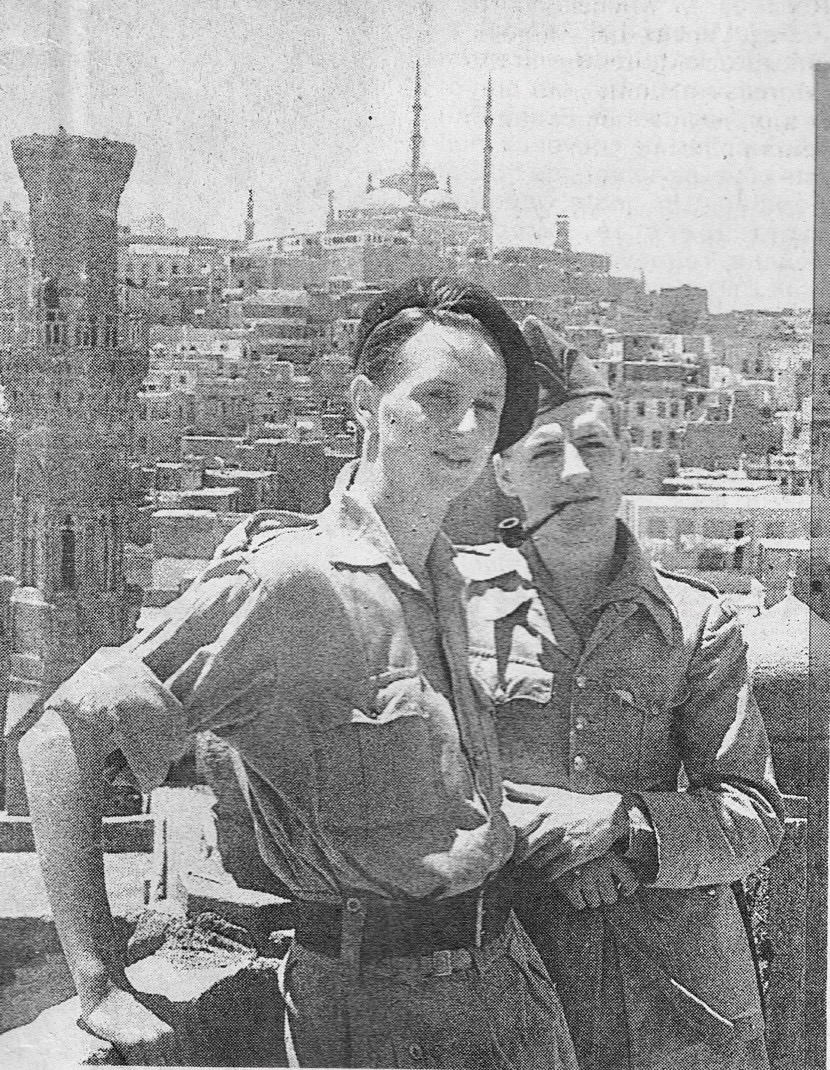
At the Mat Pilote, we honor not only the maritime heritage of our historic semaphore tower but also the extraordinary courage of those who fought for France’s freedom. Our entire restoration project exists because of one man’s vision and sacrifice: Claude André Joseph Robinet, known by his nom de guerre “Claude Rivière”—our beloved “Kikli,” who brought the Mat Pilote into our family to preserve it and the WWII memories it embodied for him. Without his initial act of preservation and the love for this place that he transmitted to us, we would not be here today restoring this historic tower and preserving its stories.
Born October 4, 1921 in Moret-sur-Loing, Claude died on February 14, 2020 in Fontainebleau at age 98, having lived long enough to learn—50 years after the fact—that his stolen intelligence had enabled one of the war’s most symbolic commando operations.

From Student to Spy
When France fell under Nazi occupation, the young student Claude joined “La Bande à Sidonie” (Sidonie’s Gang), a resistance group founded by Suzanne Wilborts on the Île de Bréhat off the Brittany coast. This network, operating from Paimpol, Plouha, Lannion, Perros-Guirec, and Tréguier, specialized in intelligence gathering and facilitating escapes to England. In 1941, they were integrated into the réseau Georges France 31, connecting them to British Intelligence operations.
In the summer of 1941, Claude undertook an audacious mission that would change the course of Allied operations in Brittany. Accompanied by his friend Mazerand, he infiltrated the German semaphore station at Plouézec near Paimpol—a building remarkably similar to our own Mat Pilote. There, under the noses of German sentries, he stole two crucial items: a massive German military map—over 4 meters long—detailing all coastal defenses from Paimpol to Bréhec, and a portrait of Adolf Hitler.
The map was successfully smuggled to London via Spain. The Hitler portrait, however, nearly proved his undoing when French nuns sheltering him discovered it among his belongings, forcing him to flee immediately.
A Daring Five-Day Escape Across the Channel
Claude found refuge with Countess de Mauduit, an American woman at Château du Bourgblanc in Plourivo. Shortly before his escape, Claude visited Marcel Cachin, the prominent communist leader who was hiding in Plourivo, to collect a secret message intended for General de Gaulle.
On January 15, 1942, conditions aligned for what would become a harrowing maritime escape. Claude boarded the small, undecked motorboat “La Korrigane” with four other resistance fighters: Pierre Guélorget, François Menguy (the pilot), René Besnault, and Jean Blondel. To deceive German surveillance, they first headed toward the Île de Bréhat before turning toward England at nightfall.
The crossing became a five-day nightmare. The compass failed, forcing navigation by stars alone. Heavy seas damaged their supplies, the engine repeatedly failed in dangerous conditions, and they had to constantly bail water to prevent capsizing. By the fifth day, reduced to drinking rainwater mixed with fuel and sucking on chicken bones, they were finally rescued near the Eddystone Rocks by HMS Polruan—exhausted, with frozen feet, barely alive.
The Intelligence That Launched a Historic Raid
After hospitalization and presentation to General de Gaulle, Claude delivered Cachin’s message. De Gaulle reportedly asked only whether Cachin was still a communist. Claude then underwent security screening at Britain’s Patriotic School. British Intelligence, fascinated by his semaphore infiltration, asked him to redraw detailed plans of the Plouézec building and surrounding German defenses. These sketches, combined with his stolen map, were carefully archived.
The intelligence proved invaluable for Operation Fahrenheit, executed on the symbolic night of November 11-12, 1942—Armistice Day. Using Claude’s drawings and RAF aerial photographs, 11 British commandos from the Small Scale Raiding Force assaulted the German position at 3:10 AM, killing one sentry and wounding three others. Though they withdrew without prisoners, the raid succeeded without British casualties.
Lord Mountbatten personally telegrammed Winston Churchill with news of the success—unusual for such small operations, but significant due to the Armistice Day symbolism. Remarkably, Claude himself had no idea his intelligence had enabled the raid until historian Dr. Michel Guillou discovered the connection in British archives and informed him 50 years later.
Recognition and Reunion
In November 1992, an extraordinary commemoration took place at Plouézec. Under the presidency of Charles Josselin, French Minister of the Sea, Claude Rivière was reunited with four British commando veterans who had used his intelligence for Operation Fahrenheit—a remarkable meeting 50 years in the making.
After his escape, Claude joined the Free French Forces, serving with the Terre DFL (Division Française Libre) – Middle East, artillery section. He was deployed to Egypt, where he contracted malaria—a condition that would affect him for the rest of his life. For his perilous escape from occupied France, he received the Médaille des Evadés (Escapees Medal). His military file remains preserved as GR 16 P 515304 in the Service historique de la Défense archives.
Preserving His Legacy
While Claude’s documented wartime activities centered on the Plouézec semaphore in northern Brittany, his connection to our Mat Pilote represents the enduring family ties that bind us to this historic place. Both structures served the same essential maritime purpose—guiding and protecting those who traveled these dangerous waters—and both embody the maritime traditions and indomitable spirit that Claude carried throughout his life.
Today, as we restore the Mat Pilote, we honor not only its architectural heritage but also the memory of those like Claude Rivière who risked everything for freedom. His story reminds us that even the smallest acts of courage—a young student stealing maps from a semaphore station—can change the course of history. In restoring the Mat Pilote, we ensure that the spirit of resistance he embodied will endure for generations to come. The Mat Pilote restoration project continues the legacy of courage and preservation that we inherited from Claude Rivière—our beloved Kikli.
Sources and Further Reading
- francaislibres.net database
- Michel Guillou, “Les Anglais et la Résistance bretonne” (2013)
- OpenEdition Books: Allied Military Operations in Brittany
- Service historique de la Défense archives (GR 16 P 515304)
- British National Archives, DEFE2 series (Operation Fahrenheit records)
- Our family oral history (without Kikli’s jokes)
Leave a Reply